

COP23 United Nations Climate 1 Day Conference Official Cultural Event in Bonn Tuesday 14th November 2017 10.30-18.00
Here the speakers for Wednesday 15th November 2017 in the Bonn Zone of COP23:
| The Green Economics Institute
Reforming economics, for people everywhere, nature, other species, the planet and its systems |
Latest up to date news: All the news from COP23 -in The Green Economist Special Issue from COP23 !
The Green Economics Institute invites you to its Official Cultural Side Event at the COP 23 Climate Conference
The Global Carbon Budget and Global Investment

A one Day conference on fossil fuel divestment, green investment and carbon budgets. Exploring innovations in green investment and the economic structures for a carbon budget of 2 tonnes per capita by 2022
Tuesday 14th November 2017. 10.30-17.00
Universitäts Club
9 Konviktstrasse, Bonn
Underground station Universität/Markt


Reforming Economics, Investment and Finance
Top speakers and influencers share with us how we can work together to make a difference.
Possibilities and challenges of rapidly halving the Global Carbon Budget.
We explore the possibility and challenges of rapidly halving the Global Carbon Budget by 2022.
How do we do this is the subject of our event.
Introducing new investment ideas, structures and models with top climate scientists, policy makers, green economists, bankers and city traders, we can create a fossil free, diverse, equitable, green dynamic beneficial economy
Groundbreaking research finds that 100 active fossil fuel producers are linked to 71% of industrial greenhouse gas emissions since 1988. At the same time, scientific advances are making it possible to attribute responsibilty for extreme weather events to greenhouse gas emissions. Will the threat of litigation add to ethical considerations to accelerate divestment from fossil fuels? Is Green Investment ready for a major switch in investment patterns? We explore these questions during the conference
Speakers
Agneta Granstroem (Sweden) MP, Indigenous Sami; The Arctic Region, Sweden talks about the impact of climate change in the Artic and for indigenous peoples. She also addresses Gender issues on this United Nations COP 23 Gender Day
Natalie Bennett,(UK and Australia) Journalist, former Editor The Guardian Weekly Agroenvironmentalist and Green Economics Institute Member, Board Member, the Green European Foundation. She also addresses Gender issues on this United Nations COP23 Gender Day
Ms. Enkhbayar Shagdar (Mongolia) ERINA Economic Research Institute for North East Asia. Japan.Expert author on Carbon Budgets, Author paper on Carbon Budgets. Former Director-General, Information Monitoring and Evaluation Department, Ministry of Agriculture and Industry of Mongolia
Dr. Georgy Safonov, (Russia) Director, Center for Environmental and Natural Resource Economics, Higher School of Economics, Russia representing ERINA.Author of a paper on Carbon Budgets and Advisor to the President of Russia on Climate Change: Climate Forum for Russian Cities
Professor Corinne LeQuere, Special Guest Speaker and specialist in Carbon Budgets, University of East Anglia advises us on the viability of the two tonnes of carbon option and explains her research on global carbon budgets and the current situation and findings of models. Please note that Professor LeQuere is appearing in her capacity as an invited expert guest.
Tim Cholibois (Germany) Environmental Change Institute Oxford and German , Federal Ministry for the Environment, Nature Conservation, Building and Nuclear Safety, (BMUB), discusses the climate change process and introduces climate finance issues
Pamela Harling (UK) qualified at the University of Cambridge Introduces Zero Carbon Housing and how we can all achieve it, having just converted her house.
Dr. Thomas Duncanson, (USA), Professor of Communication. will explain about Divestment and how it works.
Jane Reynolds, (UK) Is our host for the day. She will lead us in an exploration of what perverse incentives do to skew todays investments which ruin the climate and and how new kinds of investment need to be introduced. She asks the questions about what sorts of investments will work and have worked and how we decide if the Green Economy can be used to ensure our future works better in this respect than the recent past of invesment decisions. One of the sessions will focus on the effect of different types of investment futures on people and on the poor. Jane Reynolds is a Director of The Green Economics Institute and Professional Editor and Writer and part of our Books Director Team atThe Green Economics Institute.
Karina Registad (Norway) Climate Change Official, discusses the Sustainable Development Goals and their implementation by Bergen City in Norway and how they will help with shifting investment towards more benevolent and useful work and away from fossil fuels and towards renewables and the SDGs.
Michael Shipley (UK) Oxford, Salford. Zoologist, Environmental Resources. Biology, Ecology the Natural World. Big Picture, what sustainability means in the real world ideally .Workshop encourages participants to consider the 6th ever mass exinction and what to do to stop it.
Tim Cholibois, (Germany) Environmental Change Institute Oxford and German , Federal Ministry for the Environment, Nature Conservation, Building and Nuclear Safety, (BMUB), discusses the climate change process and introduces climate finance issues and explains how it works and how it can be used for regeneration
Marcel who is Cambridge University’s Divestment Campaign Manager has had a huge influence on the global divestment campaign and will explain what Divestment is and how it works and illustrates the different Divestment Campaigns going on today.
Pamela Harling, (UK) qualified at the University of Cambridge, Introduces Zero Carbon Housing and how we can all achieve it, having just converted her house.(TBC)
Mr. Unyime Robinson, (Nigeria) WASIF Water Safety Foundation (Nigeria) sensitizes and empowers Nigerians on the issues of climate change, maritime safety and sustainable community development and environment. (TBC)
Miriam Kennet Director The Green Economics Institute, Founder of The International Journal of Green Economics, Introduces her ideas for Ambition for the COP Process and what it can achieve next and introduces her latest proposals for the UN and what is being adopted and talks about Carbon Budgets and Carbon Rationing and Investment
鈴木紅良 Koryo Suzuki(Japan) The Green Economics Institute, talks about economics and investment issues and farming and organics efficiency and climate impacts
Professor Ehtisham Abassi ( India and Saudi Arabia) discusses climate change impacts and latest impacts on Urbanisation.
Michelle Gale (USA and Brazil) an expert in Human Rights Law and also economics and International Relations. She is a Director of The Green Economics Institute and also Director of a Charity in the USA UMMA which helps the poor. She is an expert in our field and will discuss her work at the COPs she has attended and lead for The Green Economics Institute over recent years.
[/box]
Supporting data report
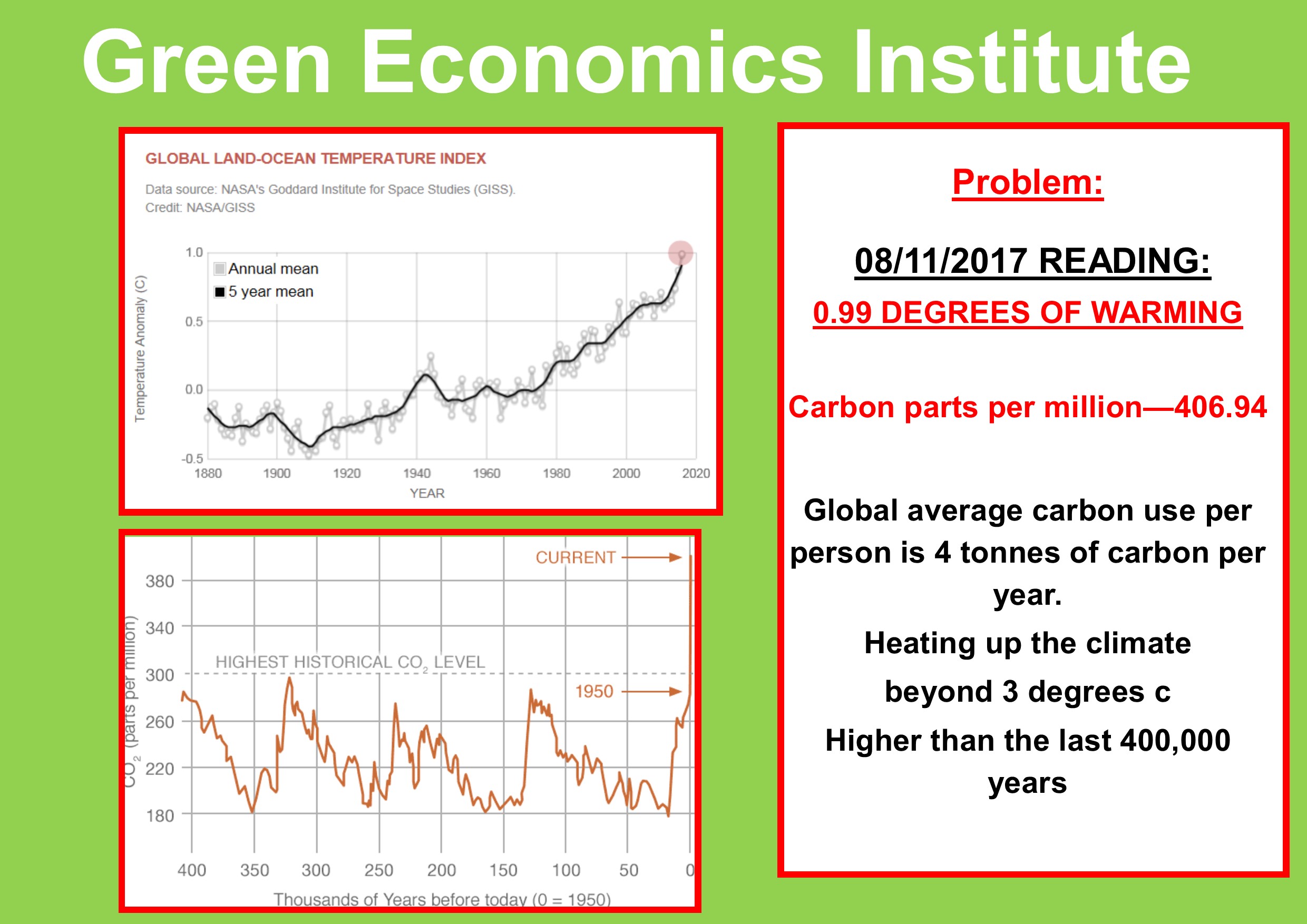
Data Map of Countries’ Carbon Usage
Green Economics:
An economics of caring sharing and supporting each other
Let’s get serious about saving the climate: 2 tons of carbon per
person each by 2022!
Let’s leave the forth coming generations with a better pack of
resources than we inherited!
Carbon Rationing Now! Let’s stop runaway climate change
together!
No2. Our official Bonn Zone 2 Tonnes of Carbon Side Event in the Bonn Zone Wednesday 15th November 2017 15.00
The Green Economics Instituteflyermk26
Our official Side Event in the Bonn Zone where we will be looking at the Carbon Budgets and the science and getting serious about climate change and a 2 tonnes of carbon ambition for everyone on the planet



Carbon countdown clock: how much of the world’s carbon budget have we spent?


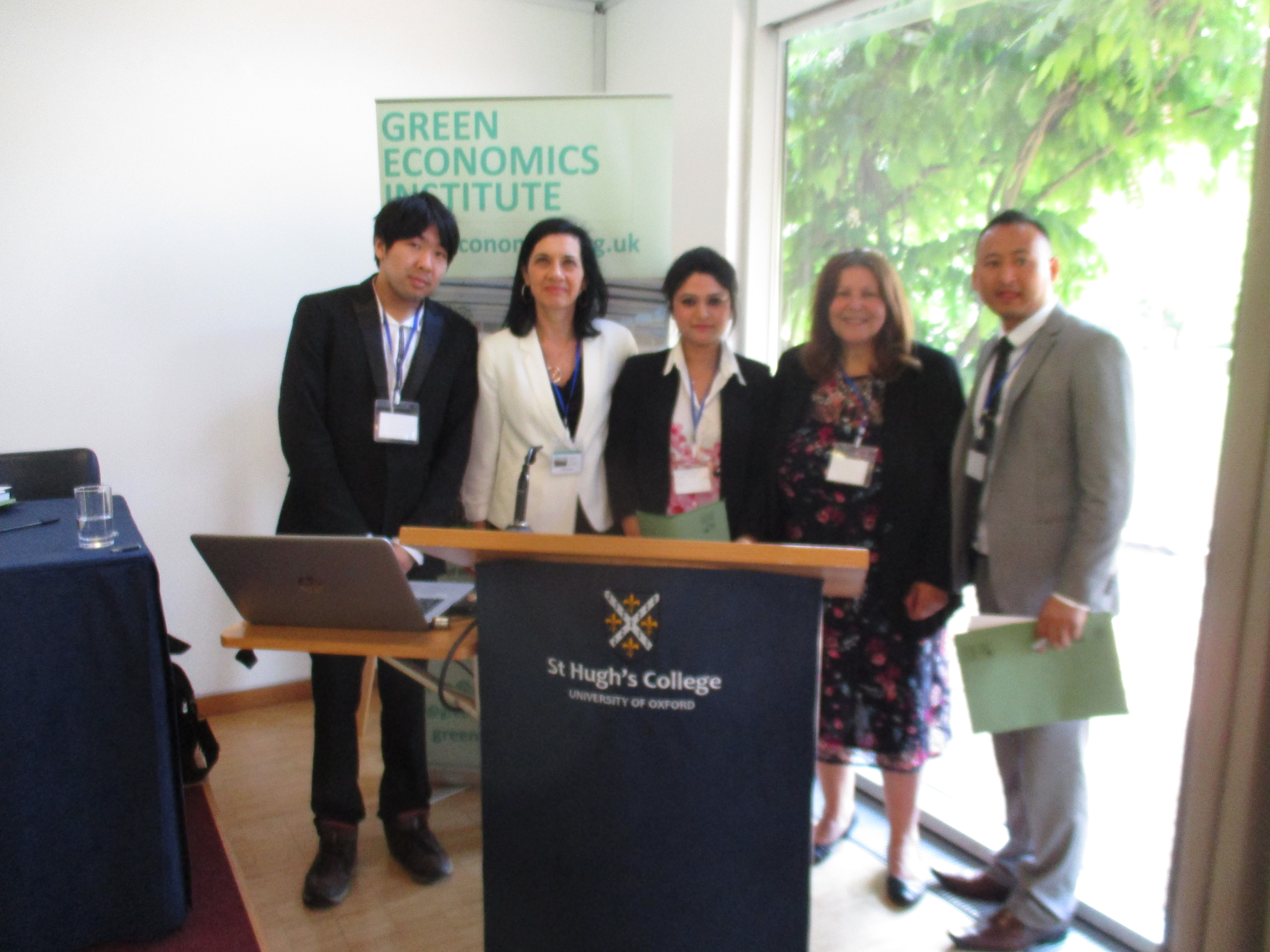
Happenings at our Exhibitions Stand So far at our Green Economics Institute COP23 United Nations Climate Conference